
 USA & CAN:
 MX:


By Andrés Jurado, Founder & Director, My Medical Vacations · 16 years coordinating medical travel to Cancun, Mexico · 8,000+ cases coordinated
Published: October 24, 2026 · Last updated: October 24, 2026
Quick answer: Loose skin after Ozempic, Wegovy, or Mounjaro usually doesn’t tighten on its own once weight loss is significant. Body contouring surgery, most often a tummy tuck, arm lift, or thigh lift, removes the excess skin and tightens underlying tissue. Most surgeons want your weight stable for about 6 to 12 months first, and larger plans are often staged.
Key facts
-
About 1 in 8 U.S. adults (12%) say they are currently taking a GLP-1 drug. (KFF Health Tracking Poll, November 2025)
-
Upper body lifts grew 22%, arm lifts 21%, and thigh lifts 20% in the U.S. in 2025. (ASPS, 2025 Statistics)
-
82% of ASPS member surgeons reported GLP-1-related consultation requests in 2025. (ASPS)
-
Tirzepatide 15 mg produced an average 20.9% weight loss over 72 weeks in the SURMOUNT-1 trial. (New England Journal of Medicine)
-
A stable weight for at least 6–12 months is generally recommended before cosmetic surgery after major weight loss. (American Board of Cosmetic Surgery)
Why does GLP-1 weight loss leave loose skin?
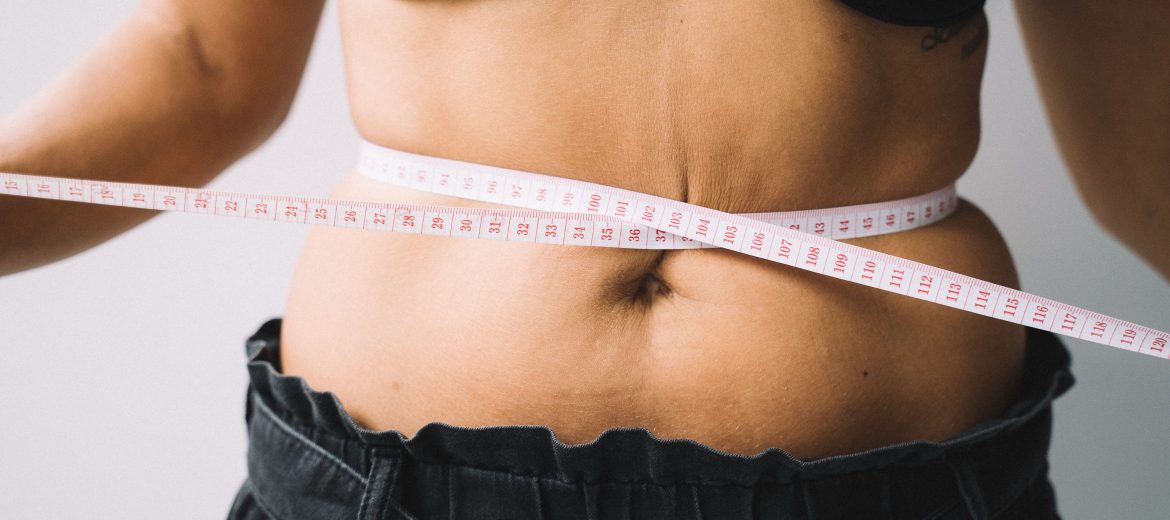
GLP-1 weight loss leaves loose skin because fat volume shrinks faster, and further, than stretched skin can retract. Skin that has been expanded for years loses some of its elastic recoil, so when the volume underneath disappears, the skin folds and hangs, especially on the abdomen, upper arms, and inner thighs.
The scale of weight loss is the key factor. In clinical trials, semaglutide produced an average 14.9% weight loss over 68 weeks (NEJM), and tirzepatide 15 mg produced 20.9% over 72 weeks. Those are levels once associated mainly with bariatric surgery. Age, genetics, sun damage, smoking history, prior pregnancies, and how long you carried the extra weight all affect how much your skin rebounds.
Exercise builds muscle underneath, but it cannot shrink stretched skin; the ASPS notes that sagging upper-arm skin “cannot be corrected through exercise.”
Ozempic® and Wegovy® are registered trademarks of Novo Nordisk. Mounjaro® and Zepbound® are registered trademarks of Eli Lilly. My Medical Vacations is not affiliated with either company.
What body contouring procedures treat loose skin after weight loss?
The main procedures that treat loose skin after weight loss are the tummy tuck, arm lift, thigh lift, lower body lift, and breast lift. The ASPS describes body contouring as surgery that “improves the tone of underlying tissue and removes excess fat and skin,” and lists each by the area it treats:
-
Tummy tuck (abdominoplasty): excess abdominal skin, often with muscle repair
-
Arm lift (brachioplasty): sagging upper-arm skin
-
Thigh lift (thighplasty): loose inner or outer thigh skin
-
Lower body lift: the abdomen, buttocks, and outer thighs in one circumferential procedure
-
Breast lift: sagging, deflated breasts
Liposuction alone generally isn’t enough when skin is loose. The ASPS notes liposuction works where skin “has good elasticity”; when it doesn’t, excess skin has to be removed.
Tummy tuck, arm lift, or thigh lift: how do they compare?
|
Factor |
Tummy tuck |
Arm lift |
Thigh lift |
|
Treats |
Loose abdominal skin, weakened or separated muscles |
Hanging skin on the upper arms |
Loose inner or outer thigh skin |
|
Typical scar |
Low across the lower abdomen, usually below the underwear line |
Inside or back of the upper arm |
Groin crease and/or inner thigh, depending on type |
|
Return to desk work |
Often 2–4 weeks |
Often 1–3 weeks |
Often 1–3 weeks |
|
Heavy lifting / strenuous activity |
Avoid for about 6 weeks |
Avoid for several weeks |
Avoid for about 6 weeks |
|
Typical stay before flying home |
About 10–14 days |
About 7–10 days |
About 10–14 days |
|
Often combined with |
Liposuction, breast lift, hernia or diastasis repair |
Breast lift, upper body lift |
Lower body lift, liposuction |
Recovery ranges are general guidance from the sources in this article; your surgeon will confirm based on your case and the extent of surgery.
What does a tummy tuck do after GLP-1 weight loss?
A tummy tuck removes loose abdominal skin and, in most cases, tightens the abdominal wall. According to the ASPS, it “removes excess fat and skin and, in most cases, restores weakened or separated muscles.” It’s among the three most requested cosmetic surgeries in the U.S., according to the ASPS 2025 report.
Recovery is real but manageable. Mayo Clinic’s patient guidance notes that drains may stay in for a few days, many people return to work in about 2 to 4 weeks, you’ll need to be careful moving for about six weeks, and sports should wait at least eight weeks. For patients with a hernia or significant muscle separation, see Can You Combine a Tummy Tuck With Hernia or Diastasis Repair?
What does an arm lift involve?
An arm lift, or brachioplasty, removes hanging skin from the upper arm and tightens the supporting tissue underneath. The trade-off is the scar: according to Cleveland Clinic’s patient guidance, the incision is made on the inside or back of the arm and typically runs the length of the upper arm.
Many patients consider that scar a fair exchange for wearing sleeveless clothing comfortably. Expect a compression garment for several weeks and no heavy lifting during early recovery. Weight stability is essential; significant future weight change will stretch the skin again.
What does a thigh lift involve?
A thigh lift removes loose skin from the inner or outer thighs, and the type depends on where the laxity sits. Cleveland Clinic describes mini, inner (medial), outer, and spiral variations, each with a different incision pattern and scar.
Incisions generally heal in about six weeks, and swelling can take around six months to resolve fully. Cleveland Clinic also notes that good candidates have “maintained your goal weight for a year, and don’t plan to lose more,” a slightly longer window than for some other procedures. Wound healing issues and fluid buildup are the most common complications, which is why following your surgeon’s activity and compression instructions matters.
Can you combine body contouring procedures in one surgery?
Sometimes, but larger plans are often staged. Cleveland Clinic notes that excess skin removal “often takes place in stages” and that some combinations, such as a lower body lift with a tummy tuck, can happen in the same session.
Your surgeon will balance total operating time, your overall health, and your recovery support, often treating the area that bothers you most first. Many patients also plan their face separately; see Facelift After Ozempic or Wegovy: When Is the Right Time to Have Surgery?
When is the right time for body contouring after Ozempic?
The right time is when your weight has been stable for about 6 to 12 months. Mayo Clinic advises keeping a stable weight for at least 6 to 12 months before a tummy tuck, and the ASPS lists “adults whose weight loss has stabilized” as the first criterion for body contouring candidates.
You also don’t necessarily need to stop your medication. October 2024 multi-society guidance led by the American Society of Anesthesiologists says most patients can continue GLP-1 medications before elective surgery, with some asked to follow a 24-hour liquid diet. That decision belongs to your prescriber, surgeon, and anesthesia team. See Should You Stop Ozempic Before Surgery?
What to ask any surgeon before body contouring after GLP-1 weight loss
-
Are you board-certified in plastic surgery, and by which board? (In Mexico, look for certification by the Consejo Mexicano de Cirugía Plástica, Estética y Reconstructiva — CMCPER.)
-
How many post-weight-loss body contouring cases do you perform each year?
-
Which areas would you treat first, and would you stage my procedures?
-
Where will my scars be, and how do you plan them?
-
How do you reduce the risk of blood clots, especially before a flight home?
-
How will you coordinate with my GLP-1 prescriber and the anesthesia team?
-
Is the facility accredited, and what happens if I need a return to the operating room?
-
Who follows up with me after I fly home?
How does body contouring in Cancun work for U.S. and Canadian patients?
-
Case review before you book anything. You share photos, your weight-loss timeline, your current dose, and your medical history.
-
Surgical plan and staging, including which procedures to combine and which to separate.
-
Pre-operative clearance with lab work, anesthesia review, and clot-prevention planning.
-
Surgery, usually followed by one or more nights of observation depending on the procedure.
-
Local recovery of roughly 7–14 days, longer for combined procedures, with drain removal and wound checks. Your surgeon will confirm based on your case.
-
Remote follow-up after you’re home.
At My Medical Vacations, we don’t operate on anyone. We’re an independent coordinator: we evaluate your case, match you with a board-certified plastic surgeon experienced in post-weight-loss contouring, and manage the full journey with bilingual nursing support before, during, and after surgery. In 16 years and 8,000+ coordinated cases, we’ve learned recovery planning matters as much as surgery.
Frequently asked questions
Will loose skin from Ozempic tighten on its own? Mild laxity may improve somewhat over time. After significant weight loss, stretched skin generally doesn’t retract fully without surgery.
How long should I wait after reaching my goal weight? Most surgeons recommend a stable weight for about 6 to 12 months. Some prefer a full year for thigh lifts.
Can I have a tummy tuck, arm lift, and thigh lift at the same time? Some combinations are done together, but larger plans are often staged for safety. Your surgeon will decide based on operating time and your health.
Are the scars permanent? Yes. Scars fade and flatten over time but don’t disappear. Surgeons place them where clothing typically covers them when possible.
Can I stay on Wegovy after body contouring? Many patients do. Continued significant weight loss can create new laxity, so discuss your weight goals with your surgeon first.
How long do I need to stay in Cancun? Typically about 7 to 14 days depending on the procedure, longer for combined surgery. Your surgeon will confirm based on your case.
Is it safe to fly after body contouring? Flying after surgery carries some blood clot risk. Your surgeon will clear you to fly and may recommend compression stockings, walking breaks, or medication.
Why are patients traveling to Mexico for body contouring? Access to board-certified plastic surgeons with high post-weight-loss volume, shorter wait times, and coordinated recovery. The key is choosing the right surgeon, not the lowest price.
Get your case evaluated in 36 hours
Send us your photos and your weight-loss history. Within 36 hours, our team reviews your case in a private WhatsApp group and tells you honestly which procedures make sense, in what order, and whether now is the right time.
Start your case evaluation on WhatsApp →
This article is for educational purposes and is not medical advice. Individual results vary. Always consult a qualified, board-certified surgeon and your prescribing physician about your specific situation.


